spanduk
Beranda

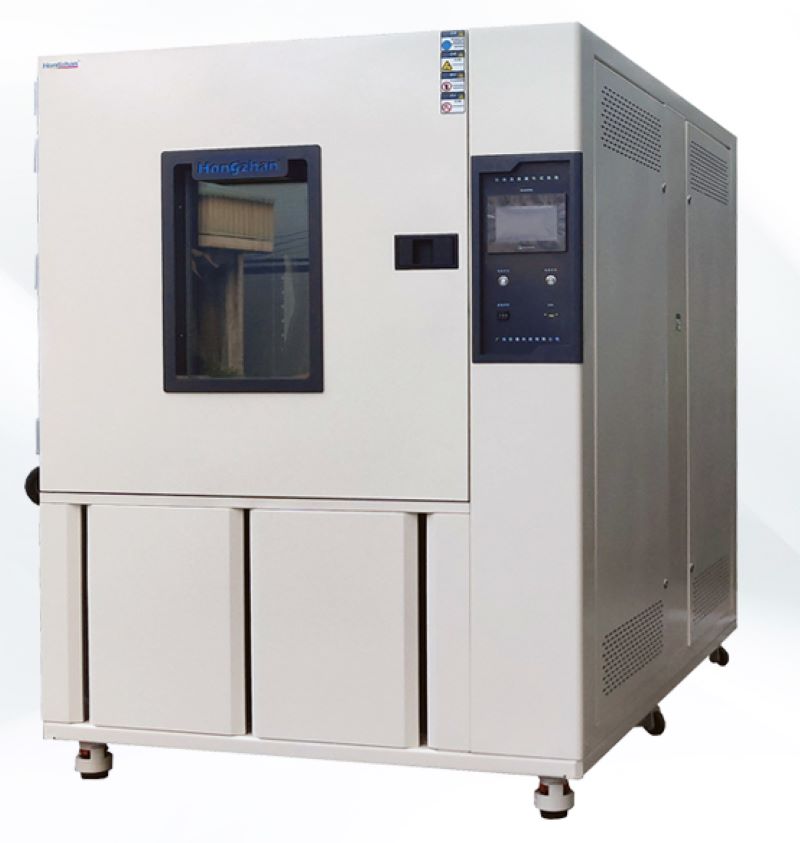
Ruang Uji Perubahan Suhu Cepat

Ruang Uji Perubahan Suhu Cepat

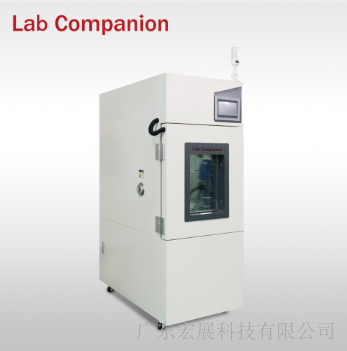
  • Lab Companion Walk-in Rapid Temperature Change Test Chamber — A New Testing Solution for Large-Scale Equipment in the AI Computing Era Lab Companion Walk-in Rapid Temperature Change Test Chamber — A New Testing Solution for Large-Scale Equipment in the AI Computing Era
    Apr 20, 2026
    In recent years, the iteration speed of core components of AI servers has been accelerating, and the heat load has risen sharply. Taking an AI server equipped with 8 high-end GPUs as an example, its peak power consumption easily exceeds 10kW, and the power density of high-density cabinets soars to more than 50kW or even 100kW, with heat output 3 to 5 times higher than that of traditional servers. More importantly, modern high-load clusters are not the occasional periodic peaks in traditional data centers, but continuous heat generation brought by high-intensity continuous operation. When the hardware operating temperature reaches the critical safety threshold of 85°C to 90°C, the GPU will automatically start the "thermal throttling" self-protection program to cool down by sharply reducing the core frequency, which directly leads to a significant attenuation of computing power, a drop in operating efficiency of up to 25%, and an unlimited passive extension of model training time, seriously restricting the efficiency of AI R&D and application landing. The drawbacks of traditional environmental reliability testing solutions have been fully exposed in this context. Limited by the cavity volume and heat load capacity, traditional testing equipment cannot accommodate the entire AI server/rack system at all, nor can it simulate the dense heat generated during the actual operation of GPU clusters, failing to meet the full-scenario reliability verification needs of AI equipment. Under this premise, a walk-in rapid temperature change test chamber with high load capacity and accurate environmental simulation capabilities has become an essential key equipment in the R&D and mass production verification links of AI servers, and even a core support for solving the contradiction between computing power and heat dissipation. Precisely Adapted to AI High-Heat Testing: Lab Companion Walk-in Rapid Temperature Change Environmental Chamber As a "leader in domestic scenario adaptation" with more than 20 years of experience in the field of environmental reliability testing equipment, Lab Companion, in conjunction with the advanced technical standards of France's Jielong, based on China's strong local R&D and manufacturing capabilities, has launched a high-heat, high-load Walk-in rapid temperature change environmental chamber specifically designed for large-scale high-power equipment testing, which accurately matches the testing needs of the AI computing era. Large Capacity + High Load, Easily Undertaking AI Whole-Rack Testing Traditional testing solutions are generally limited by equipment load capacity, making it difficult to restore the real heat generation environment of AI servers under full load, resulting in a disconnect between test results and actual application scenarios. Lab Companion's walk-in environmental chamber has achieved a major technological breakthrough — it can simultaneously carry 1000kg of aluminum ingots and a heat load of up to 50kW for testing, and the load capacity can be flexibly expanded according to the customer's actual testing needs. Whether it is an entire rack of AI servers, GPU cluster cabinets, or high-power communication equipment whole-system, the environmental chamber can easily accommodate them with its "super large capacity", eliminating the need to build additional testing platforms, greatly simplifying the testing process, and improving testing efficiency and accuracy. Indirect Refrigeration System, Achieving Dual Breakthroughs in Energy Saving and Precision In terms of energy consumption control and testing accuracy, the environmental chamber is equipped with an advanced indirect refrigeration system, which not only strictly controls the temperature and humidity uniformity within ±2K and the temperature and humidity fluctuation within ±1K during the test to ensure the accuracy and reliability of test data, but also reduces energy consumption by more than 50% compared with traditional refrigeration methods. Long-term use can save customers a lot of energy costs, truly achieving a win-win situation of environmental and economic benefits, and adapting to the needs of enterprises' green development. Wide Temperature Range and High Precision Control, Adapting to Diversified Industry Standards The equipment's temperature testing range covers -70℃ to +150℃, and the humidity range covers the standard 20~98%RH (the low-humidity type can be expanded to 5~98%RH), which can meet the diverse testing scenario needs of different AI equipment. The rapid temperature change series supports linear or non-linear temperature change rates from 5℃/min to 25℃/min, and can be equipped with a liquid nitrogen auxiliary refrigeration system to increase the cooling rate to 30℃/min, efficiently simulating extreme temperature change environments. The overall design strictly follows the GB/T 2423.2-2008 high-temperature testing standard, and also meets the latest industry standards such as T/UNP 538-2025, ensuring that the test results are authoritative and universal. Intelligent Control System, Easy Operation and Full-Process Traceability The equipment is equipped with the Q8 series intelligent controller, which supports multi-segment program editing, precise temperature and humidity calculation and full-process data recording. It is easy to operate and understand, without cumbersome operations by professional personnel. The entire testing process is traceable, facilitating customers to review test data and optimize test plans. In addition, the environmental chamber can seamlessly conduct joint debugging and testing with new heat dissipation solutions such as liquid cooling, and supports external CDU thermal management equipment, helping whole-machine manufacturers accurately verify the reliability of products under different heat dissipation solutions, quickly find thermal design shortcomings, and then optimize the system thermal management plan to enhance the core competitiveness of products. Laying a Solid Foundation for Computing Power Breakthroughs, Empowering the High-Quality Development of the AI Industry Heat is the natural enemy of computing power and a key bottleneck restricting the sustainable development of the AI industry. Lab Companion's high-heat walk-in environmental chamber is precisely the underlying supporting force in the AI computing era — it can not only help enterprises accurately verify the operational stability of AI equipment under extreme heat loads, but also enable the new generation of computing power products to have "temperature resistance for real application scenarios" before they are launched, reducing product failure risks from the source, shortening the R&D cycle, and accelerating product mass production and landing. Up to now, this series of products has been successfully applied in intelligent computing centers in many countries and regions in the Asia-Pacific. With stable operation performance, accurate testing capabilities and flexible scenario adaptability, it has won wide recognition and high evaluation from industry customers. In the future, with the continuous iteration of AI technology, computing power will be further upgraded, equipment power consumption and heat density will continue to increase, and testing requirements will become more stringent. Lab Companion will continue to deepen its presence in the field of environmental testing equipment, focus on AI computing power testing scenarios, continuously optimize product performance and iterate technical solutions, and contribute domestic strength to the breakthrough development of global AI computing power.
    BACA SELENGKAPNYA
  • Lab Companion Rapid Temperature Change Test Chamber – Exclusive for Semiconductor Chip Testing Lab Companion Rapid Temperature Change Test Chamber – Exclusive for Semiconductor Chip Testing
    Mar 09, 2026
    Product Positioning: Exclusive for Semiconductor Chip Testing, Adapt to Extreme Temperature Changes from -70℃ to +150℃ Nowadays, semiconductor chips are accelerating iteration towards high integration, high computing power and miniaturization. The reliability test standards for high-end chips (including 5G communication chips, automotive-grade chips, radio frequency chips, etc.) continue to upgrade, imposing extremely stringent requirements on the extreme temperature change adaptability and temperature control accuracy of test equipment. Such high-end chips need to undergo hundreds of temperature change cycle tests in the ultra-wide temperature range of -70℃ to +150℃, simulating extreme working environments to accurately screen potential defects such as bonding wire fatigue, package delamination and performance attenuation, ensuring the long-term operational stability of chips. However, conventional rapid temperature change equipment on the market generally has shortcomings such as insufficient temperature range coverage, low temperature control accuracy and poor scenario adaptability, making it difficult to meet international authoritative test standards such as JEDEC JESD22-A104, which directly restricts the R&D iteration and mass production progress of semiconductor chips. Focusing on the environmental testing equipment field and targeting industry pain points accurately, Lab Companion has launched an exclusive rapid temperature change test chamber for semiconductor chips. With its ultra-wide temperature range of -70℃ to +150℃ and high-precision temperature control performance, it perfectly adapts to the stringent test requirements of various semiconductor chips. Customized Core Parameters, Precisely Matching the Rigid Needs of Semiconductor Testing Lab Companion special rapid temperature change chamber for semiconductors is polished with all-dimensional core parameters around the characteristics of semiconductor chip testing, taking into account stability, accuracy and practicality, and fully conforms to the test standards of high-end chips: • Ultra-wide Temperature Range Coverage: The basic temperature range covers -70℃ to +150℃, and can be flexibly expanded to -70℃ to +220℃. It is fully suitable for multiple scenarios such as -40℃~+150℃ cycle test of automotive-grade chips, ultra-low temperature test of radio frequency chips, and high-temperature aging test of advanced packaging chips, with no shortcomings in temperature range adaptation. • Adjustable Temperature Change Rate + High-precision Temperature Control: The temperature change rate is freely adjustable from 5 to 20℃/min. Low-speed temperature change can be set for precision chips to avoid damage to the internal structure of chips caused by rapid temperature change; the temperature control accuracy reaches ±0.3℃, and the temperature uniformity in the chamber is ≤±0.5℃, fully in line with the international standard of JEDEC JESD22-A104. It can accurately capture the subtle performance fluctuations of chips during temperature change, ensuring the authenticity, reliability and traceability of test data. • Exclusive Protection Design: Equipped with nitrogen replacement function, it can accurately control the low-oxygen environment in the chamber, effectively avoiding problems such as oxidation, condensation and corrosion during chip testing, protecting precision chips in all directions and ensuring the smooth progress of the test process. Special Scenario-based Design, Adapting to Diverse Semiconductor Test Conditions Based on the special process requirements of semiconductor chip testing, Lab Companion has created a full-process customized service, optimized the equipment structure and functional configuration, solved the industry problem of poor adaptability of traditional equipment, and covered multi-scenario test needs: • Linkage Test Adaptation: Optimize the internal layout of the chamber and reserve standardized probe station interfaces, which can be directly connected to the chip test probe station to realize linkage testing without additional equipment modification, solving the pain points of incompatible interfaces and unreasonable layout, simplifying the test process and improving test continuity. • Anti-interference Optimization: Built-in electromagnetic shielding module, which effectively isolates external electromagnetic interference, ensures stable signal transmission during chip testing, eliminates external factors interfering with test data, and guarantees accurate and error-free test results. • Flexible Models + Intelligent Control: Launch compact small-capacity models such as 200L and 300L, suitable for small-batch R&D testing and sample verification of semiconductor chips; equipped with a 7-inch intelligent touch screen, supporting the storage of more than 200 sets of test programs, enabling rapid switching of test parameters within 45 seconds, adapting to the test needs of chips of different specifications and models, and greatly improving test efficiency. Verified by Leading Enterprises, Helping Reduce Costs and Improve Efficiency in Chip R&D With its robust performance, Lab Companion special rapid temperature change chamber for semiconductors has become the core test equipment for leading semiconductor enterprises in China and globally such as Hisilicon and SMIC, and has implemented multiple measured cases, effectively helping enterprises solve test problems and speed up R&D and mass production: After a 5G chip enterprise was equipped with Lab Companion equipment, the full temperature range cycle test time from -40℃ to +150℃ was shortened to 30 minutes, the test efficiency was increased by 4 times, and the original 4-day test task could be completed in 1 day. The temperature control deviation was ≤±0.3℃, the test data fully met the standards, and it passed the JEDEC international certification at one time, avoiding rework loss and reducing test costs. An automotive-grade MCU chip enterprise selected the 20℃/min rapid temperature change model, which can complete temperature switching in 2 minutes, with the temperature control accuracy stably maintained at ±0.3℃. Combined with the nitrogen replacement function to eliminate condensation, the test cycle was completed 15 days in advance, helping the chip pass the AEC-Q100 automotive-grade certification smoothly, and the chip package defect rate dropped below 0.05%, greatly improving product yield. Supported by Authoritative Standards, Escorting Global Layout of Products Lab Companion semiconductor rapid temperature change chamber strictly complies with many international and China’s authoritative test standards such as IEC, GB/T and JEDEC, and has passed CNAS calibration certification. The equipment test data is globally recognized and can be directly used for product compliance certification and overseas market access audit, helping semiconductor products go global easily. At the same time, Lab Companion has built a global service system. Relying on global service outlets, it provides full-cycle technical support including 2-hour rapid response and dedicated on-site technical assignment. It is equipped with a professional semiconductor test technical team, which can customize personalized test solutions according to customers' exclusive test needs, helping semiconductor enterprises improve product reliability and seize core competitiveness in the global market.
    BACA SELENGKAPNYA
  • Rapid Temperature Change Test Chamber vs. Thermal Shock Test Chamber: Labcompanion’s Differentiated Applications Rapid Temperature Change Test Chamber vs. Thermal Shock Test Chamber: Labcompanion’s Differentiated Applications
    Jan 30, 2026
    In environmental simulation testing, high-speed temperature control equipment is essential for verifying product reliability under extreme temperature variations. Guangdong Labcompanion Technology’s fast temperature change test chamber and thermal shock test chamber, both featuring high-speed temperature control, serve aerospace, military electronics, automotive new energy and other stringent industries. Though similar in core function, they have distinct principles and applicable scenarios. Common Features Both chambers are engineered to simulate extreme temperature fluctuations, supporting R&D and military testing. They meet international and domestic standards including GJB, MIL-STD, IEC. Fitted with Labcompanion’s intelligent control system, they enable curve programming, data export and remote monitoring. Built with robust structures and high-efficiency heating/cooling systems, some models adopt eco-friendly R404A refrigerant. Core Differences Item Fast Temperature Change Test Chamber Thermal Shock Test Chamber Working Principle Single-chamber, continuous & smooth gradual temperature change Two/three-zone switching, instantaneous shock via rapid sample transfer Key Parameters Adjustable rate: 5–20℃/min; Temp range: -70℃–180℃; Supports humidity control Temperature difference >150℃; Sample transfer time ≤10s; Fixed shock mode Application Scenarios Gradual temperature change tests for new energy batteries, automotive electronics, consumer electronics Instant temperature shock tests for aerospace components, military equipment, automotive glass Applicable Standards IEC 60068-2-38, GB/T 2423.22 IEC 60068-2-14, MIL-STD-810H Selection Recommendations No absolute superiority exists between the two models. Select the fast temperature change chamber for gradual, adjustable temperature change tests, which offers higher cost-effectiveness for mass R&D and testing. Choose the thermal shock chamber for instantaneous extreme temperature shock tests in aerospace and military fields, with higher budget for operation and maintenance. Selection should be based on test standards, sample characteristics and budget.
    BACA SELENGKAPNYA
  • Rapid Temperature Change Test Chamber vs. High-Low Temperature Shock Test Chamber: Technical Differences and Application Scenario Guide Rapid Temperature Change Test Chamber vs. High-Low Temperature Shock Test Chamber: Technical Differences and Application Scenario Guide
    Jan 29, 2026
    In the reliability testing of electronics, automotive and semiconductor industries, rapid temperature change and high-low temperature shock test chambers are core devices. Both simulate temperature environments but differ significantly in technical logic, test purposes and applicable scenarios. Improper selection may cause distorted test data and delayed R&D cycles. Based on practice, this article analyzes their core differences and provides scientific schemes for accurate model selection. I. Core Technical Differences: Principles and Parameters The core difference lies in temperature change mechanisms, leading to variations in parameters and structural design, addressing different test pain points. (I) Working Principle: Continuous Gradient vs. Instant Switching Rapid temperature change chambers realize stable temperature rise/fall at a set rate via cascade refrigeration and heating modules, simulating progressive temperature changes. They precisely control temperature slope to avoid overshoot. High-low temperature shock chambers adopt a two/three-chamber structure, transferring samples between temperature zones in seconds to simulate sudden cold/heat shocks. Their core is to test material tolerance via thermal stress from sudden temperature changes.   (II) Key Parameters: Different Focuses       Rapid temperature change chambers focus on load temperature change rate, control accuracy and uniformity (typical range: -70℃~180℃), suitable for accelerated life testing and compliant with relevant standards.       High-low temperature shock chambers focus on temperature recovery time and extreme range (-80℃~200℃), with fast recovery, suitable for extreme condition simulation and equipped with sample protection.   (III) Structural Design: Single-Chamber vs. Multi-Chamber       Rapid temperature change chambers have a compact single-chamber design for space-limited laboratories and support automatic docking. Shock chambers are larger with independent zones, optimized to reduce crosstalk and customizable with explosion-proof modules.   II. Application Scenario Guide (I) Rapid Temperature Change Test Chamber Suitable for slow temperature changes, it is used for functional stability and accelerated life testing in automotive electronics, consumer electronics and communications.   (II) High-Low Temperature Shock Test Chamber Suitable for instant temperature changes, it tests material and packaging reliability in semiconductors and aerospace, pre-exposing thermal expansion-related defects.   III. Selection Decision and Manufacturer Advantages       Selection core: Match product environment and test purpose — rapid chambers for gradient stability; shock chambers for extreme tolerance; large/high-heat samples prefer rapid chambers.       Domestic brand advantages: High cost-performance (lower price/energy consumption than imports), strong customization and efficient localized after-sales services.   IV. Conclusion The two devices are complementary. Selection should align with actual working conditions, not just parameters. High-quality domestic brands provide standardized and customized solutions, supporting domestic equipment replacement for reliable testing.
    BACA SELENGKAPNYA
  • Rapid Temp Change + Precision Screening: Lab Companion Test Chambers Boost Consumer Electronics Efficiency & Cost Reduction Rapid Temp Change + Precision Screening: Lab Companion Test Chambers Boost Consumer Electronics Efficiency & Cost Reduction
    Jan 13, 2026
    With the accelerated iteration of the consumer electronics industry, the requirements for the efficiency and accuracy of reliability testing have been upgraded. Guangdong Lab Companion's Rapid Temperature Change Test Chamber, positioned as a dedicated equipment for accelerated life testing, shortens the cycle with ultra-high heating and cooling rates and ensures screening effectiveness through precise temperature control. It is highly adaptable to industry needs, helping enterprises quickly complete quality verification and seize market opportunities. I. Core Efficiency Advantage: 10℃/min Rate, Reducing Test Cycle by 50% Centered on efficient accelerated testing, the equipment breaks through the efficiency bottleneck of traditional equipment and matches the rapid iteration rhythm of the industry: l Ultra-high heating and cooling rate (10℃/min): Adopting the coordinated design of cascade refrigeration system and high-efficiency heating tube, it can quickly switch from -40℃ to 85℃, reducing the test cycle by 50% compared with traditional equipment (1-3℃/min). For example, the mobile phone motherboard test is shortened from 48 hours to 24 hours; l Adapting to iteration needs: Assists multiple rounds of rapid verification in the R&D stage and mass screening in the mass production stage to avoid market launch delays; l Wide temperature range coverage (-70℃~150℃): Simulates different climate scenarios around the world without the need to replace equipment, improving test efficiency. II. Precision Control Advantage: Stable Temperature Change for Efficient Defect Screening l While ensuring high efficiency, it achieves precision through refined design to guarantee stable temperature change and accurate screening: High-precision temperature control: PID closed-loop control + platinum resistance sensor, temperature fluctuation ≤±0.5℃ without overshoot, accurately exposing potential defects such as loose solder joints; l Uniform temperature field: Optimized air duct and fan design, temperature uniformity ≤±2℃, ensuring consistent and comparable mass test data; l Multiple safety protections: Over-temperature, over-voltage, leakage protection, etc., avoiding equipment failures and sample damage, ensuring continuous and safe testing. III. Industry Case: 30% Reduction in Defect Rate A leading mobile phone manufacturer introduced the equipment for testing core components, achieving remarkable results: In the R&D stage, it completed the temperature change test that traditionally takes 60 days in only 30 days, quickly identifying and optimizing display defects; In the mass production stage, it accurately screened defective components, reducing the final product defect rate by 30% and improving test efficiency by 50%, greatly lowering after-sales costs and brand risks. IV. Summary of Core Value Guangdong Lab Companion's Rapid Temperature Change Test Chamber takes 10℃/min rate as the core of efficiency and precise temperature control + uniform temperature field as the guarantee for screening, adapting to the iteration and high-quality requirements of consumer electronics. By reducing the test cycle by 50% and the defect rate by 30%, it provides core support for enterprises in R&D acceleration, cost control and quality improvement, and is a reliable partner for enterprises to enhance competitiveness.
    BACA SELENGKAPNYA
  • Rapid Temperature Change Test Chamber: Accurately Simulating Environments to Safeguard Product Reliability
    Dec 10, 2025
        In high-end manufacturing fields (aerospace, automotive electronics, consumer electronics, etc.), a product's ability to adapt to extreme temperature fluctuations directly determines its service life and safety. As core equipment for simulating environmental stress, the rapid temperature change test chamber becomes an "essential tool" in product reliability testing, relying on its advantages of "fast temperature rise/fall + precise temperature control." 1. Core Features: Speed & Precision Advantages Fast temperature change rate: Conventional equipment reaches 1-3℃/min, while professional models can achieve 5-20℃/min (some special types exceed 30℃/min). It simulates extreme temperature cycles (-70℃ to 150℃) in a short time, greatly reducing test cycles. High temperature field stability: Adopts multi-zone heating and vortex air flow control; internal temperature uniformity is controlled within ±2℃, avoiding test errors from local temperature differences and ensuring reliable data. Intelligent control: Equipped with smart systems supporting custom temperature curve programming (presets over 100 test programs). Real-time data collection and curve display help engineers track the test process and improve efficiency. 2. Typical Applications: Industry-Specific Scenarios Core value: Expose potential product defects under temperature cycles. Key application fields include: Electronics Industry: Tests mobile phones, chips, circuit boards, etc. Detects issues like solder joint detachment and component aging to avoid malfunctions (crashing, short circuits) during use. Automotive Field: Verifies on-board radar, battery packs, sensors. Simulates -40℃ to 85℃ cycles to ensure adaptability to extreme cold and heat. Aerospace: Simulates space temperature stress for satellite components and aviation instruments, ensuring normal operation at high altitudes with severe temperature changes. 3. Key Usage Notes: Ensure Test Quality Standard sample placement: Distribute samples evenly to avoid blocking air ducts; keep a ≥5cm distance from the chamber wall to prevent local temperature interference. Regular maintenance & calibration: Inspect vulnerable components (sealing strips, heaters, sensors) regularly; conduct temperature accuracy calibration at least once a year to maintain optimal performance.     As the "gatekeeper" of product reliability testing, its performance directly affects quality judgment. Select industry-suitable equipment and standardize operations to make each test a reliable "touchstone" for product quality.
    BACA SELENGKAPNYA
  • Performance and Design of Faster Temperature Cycling Chambers
    Nov 12, 2025
        The faster temperature cycling chamber is one of the core flagship products of Lab Companion. Equipped with a high-power compressor, high-wind-speed test area and high-performance controller, the equipment elevates product testing to a new level, meeting the precise testing needs of various scenarios. The following is a detailed description of the performance characteristics and design highlights of this faster temperature cycling chamber: 1. Outstanding Performance     ① High-performance Controller: Features a 10.4-inch color touch screen for intuitive and convenient operation. It comes with powerful network functions and large-capacity storage, supported by a password-based access control mechanism to effectively protect sensitive data and ensure operational safety.     ②Integrated Water Circulation Humidity Module: The humidity module can be flexibly installed on the test chamber, with a built-in high-precision electronic humidity sensor that balances measurement accuracy and maintenance convenience. Equipped with a self-contained water purification and circulation system, the module requires no external water source, enabling easier use. 2. Innovative Design     ①Optimized Airflow Structure: Precise gradient control enhances humidity uniformity inside the test chamber, ensuring accurate and reliable test data. Top-mounted Air-cooled Channel: The air outlet is located at the top of the equipment, allowing rapid heat discharge through pipes and reducing the operating load of laboratory air conditioners.     ②Ergonomic Appearance: The front and side of the chamber adopt a smooth design, with a fully visible anti-condensation observation window. The reversible left/right door design adapts to different laboratory layouts, maximizing space utilization.     ③Precision Inspection Function: With a fast temperature change rate, the equipment can efficiently identify design defects of products before delivery, helping to improve product quality and reliability. Lab Companion offers a wide range of product models and sizes for selection, and also provides personalized customization services to meet customers' exclusive design requirements.
    BACA SELENGKAPNYA
  • Small Rapid Temperature Change (Wet Heat) Test Chamber
    Nov 01, 2025
    In response to the testing and R&D requirements of electronic components such as semiconductors and automotive electronics, Lab Companion has developed a smaller capacity small rapid temperature change (wet heat) test chamber. While maintaining the advantages of standard rapid temperature change test chambers, it can also meet the needs of customers who have requirements for space size, with a single-phase 220VAC voltage specification. It can also meet the equipment usage requirements of customers in civilian office areas such as research institutions and universities. Its main features are as follows: 1. It has powerful heating and cooling performance 2. Heating rate: 15℃/min; Cooling rate: 15℃/min 3. (Temperature range: -45℃ to +155℃) 4. Single-phase 220VAC, meeting the electricity demands of more customers 5. Single-phase 220VAC, suitable for industrial and civil power supply specifications, can meet the equipment power demands of customers in civil office areas such as research institutions and universities. 6. The body is small and exquisite, with a compact structure and easy to move 7. The miniaturized structure design of the test chamber can effectively save configuration space. 8. The inner tank volume is 100L, the width is 600mm, the depth is less than 1400mm, and the product volume is less than 1.1m ³. It is suitable for the vast majority of residential and commercial elevators in China (GB/T7025.1). 9. The standard universal wheels enable the product to move freely at the installation site. 10. Standard air-cooled specification is provided, facilitating the movement and installation of the product 11. At the same time, it saves customers the cost and space of configuring cooling towers. 12. A more ergonomic operation touch screen design 13. Through the multi-angle adjustment of the touch screen, it can meet the operation needs and provide the best field of vision for users of different heights, making it more convenient and comfortable. 14. Energy-saving cold output temperature and humidity control system, with dual PID and water vapor partial pressure control, features mature technology and extremely high precision. 15. Network control and data acquisition can be carried out through the interface (RS-485/GPIB/Web Lan/RS-232C). 16. It is standard-equipped with left and right cable holes (50mm), which facilitates the connection of power on the sample and the conduct of multiple measurements. 17. The controller adopts a color LCD touch screen, which is simple and convenient to operate 18. Through the controller, two control methods, fixed value and program, can be selected to adapt to different applications. 19. The program control can be set to 100 modes, with 99 steps for each mode. Repeat the loop up to 999 times. 20. Multiple languages can be easily switched (Simplified Chinese, English), and test data can be stored on a USB flash drive.
    BACA SELENGKAPNYA
  • Karakteristik Teknis dan Aplikasi Rekayasa Ruang Uji Perubahan Suhu Cepat
    May 21, 2025
    Artikel ini menganalisis arsitektur sistem dan karakteristik teknis ruang uji perubahan suhu cepat, dengan mempelajari parameter teknis dan desain fungsional komponen utama secara sistematis, artikel ini memberikan panduan teoritis untuk pemilihan peralatan dan pengoptimalan proses. 1. Prinsip Teknis dan Arsitektur SistemRuang uji perubahan suhu cepat beroperasi berdasarkan prinsip transfer termodinamika, mencapai variasi gradien suhu nonlinier melalui sistem kontrol suhu presisi tinggi. Peralatan tipikal dapat mencapai laju perubahan suhu ≥15℃/menit dalam kisaran -70℃ hingga +150℃. Sistem ini terdiri dari empat modul inti:(1) Sistem pertukaran panas: Struktur pendinginan kaskade multi-tahap(2) Sistem sirkulasi udara: Panduan aliran udara vertikal/horizontal yang dapat disesuaikan(3) Sistem kontrol cerdas: Algoritma PID multivariabel(4) Sistem perlindungan keselamatan: Mekanisme perlindungan interlock rangkap tiga 2.Analisis Fitur Teknis Utama2.1 Optimasi Desain StrukturalRuang ini mengadopsi desain modular dengan teknologi pengelasan baja tahan karat SUS304. Jendela observasi kaca Low-E lapisan ganda mencapai >98% ketahanan termal. Desain saluran drainase yang dioptimalkan CFD mengurangi kondensasi uap
    BACA SELENGKAPNYA
  • Metode Pembersihan Kondensor di Ruang Uji Perubahan Suhu Cepat Metode Pembersihan Kondensor di Ruang Uji Perubahan Suhu Cepat
    Jan 10, 2025
    Metode Pembersihan Kondensor di Ruang Uji Perubahan Suhu CepatRuang uji perubahan suhu cepat adalah sejenis peralatan eksperimen berpresisi tinggi dan berstabilitas tinggi, yang dapat melakukan perubahan suhu dalam waktu singkat untuk menguji perubahan kinerja bahan dan produk pada suhu yang berbeda. Peralatan ini terutama digunakan untuk mendeteksi kinerja produk dalam kondisi perubahan suhu yang cepat dan suhu batas, dan banyak digunakan dalam chip semikonduktor, lembaga penelitian ilmiah, pemeriksaan kualitas, energi baru, komunikasi optoelektronik, industri militer kedirgantaraan, industri otomotif, layar LCD, medis, dan industri sains dan teknologi lainnya.Setelah menyerahkan mesin kepada pelanggan, selain memberikan instruksi tentang tindakan pencegahan pengoperasian peralatan, juga akan menekankan perawatan peralatan sehari-hari. Setelah beroperasi dalam jangka waktu yang lama, ruang uji perubahan suhu cepat harus memberikan perhatian khusus pada perawatan sistem pendinginan, karena sistem pendinginan bukan hanya proses manufaktur yang rumit tetapi juga inti dari pendinginan peralatan, dan selanjutnya akan fokus pada pemahaman metode pembersihan kondensor di unit pendinginan.1, Pengasinan dan penskalaan kimiaUntuk kondensor cangkang dan tabung vertikal dan horizontal, metode pengawetan kimia dapat digunakan, dan deterjen asam lemah dapat disiapkan dalam tangki pengawetan. Setelah pompa pengawetan dihidupkan dan berjalan selama 24 jam, pompa pengawetan dimatikan, dan sikat baja melingkar digunakan untuk menyikat dinding tabung kondensor maju mundur, dan air dicuci hingga semua kotoran atau noda karat dan larutan kerak yang tersisa di dalam tabung bersih.2, Skala mekanisPertama, refrigeran dalam kondensor cangkang dan tabung vertikal diekstraksi, dan semua katup yang terhubung ke kondensor ditutup, dan kemudian air pendingin biasanya disuplai ke kondensor. Gunakan roda gigi bevel yang terhubung dengan pencuci pipa poros fleksibel (diameter kompor harus dipilih lebih kecil dari diameter dalam pipa pendingin untuk menggores dinding bagian dalam) di kondensor dari atas ke bawah mode penggulungan putar untuk menghilangkan kerak, karena air pendingin yang bersirkulasi dan gesekan dinding pipa menghasilkan panas, dapat membantu kotoran dan karat serta kotoran lainnya langsung tersapu keluar dari kolam. Setelah kerak berakhir, kuras air di kolam kondensat, bersihkan kotoran, dan isi ulang air.3, Skala air magnetik elektronikPada suhu normal, air magnetik elektron dapat melarutkan kalsium, magnesium, dan garam lainnya dalam air pendingin kondensor sebagai ion positif dan negatif dalam air. Air magnetik elektron dapat mengubah kondisi kristalisasinya, dapat melonggarkan struktur, mengurangi kapasitas tarik dan tekan, sehingga tidak dapat membentuk kerak keras dengan gaya ikatan yang kuat, dan diubah menjadi lumpur lepas dengan aliran air pendingin dan dibuang.Di atas adalah metode ilmiah untuk membersihkan kotoran kondensor ruang uji perubahan suhu cepat.
    BACA SELENGKAPNYA
  • Apa Jenis Uji Lingkungan PCB? Apa Jenis Uji Lingkungan PCB?
    Dec 28, 2024
    Apa Jenis Uji Lingkungan PCB?Uji akselerasi tinggi:Pengujian yang dipercepat meliputi pengujian masa pakai yang dipercepat tinggi (HALT) dan penyaringan stres yang dipercepat tinggi (HASS). Pengujian ini menilai keandalan produk dalam lingkungan yang terkendali, termasuk suhu tinggi, kelembaban tinggi, dan pengujian getaran/guncangan saat peralatan dinyalakan. Tujuannya adalah untuk mensimulasikan kondisi yang dapat menyebabkan kegagalan produk baru yang akan segera terjadi. Selama pengujian, produk dipantau dalam lingkungan yang disimulasikan. Pengujian lingkungan terhadap produk elektronik biasanya melibatkan pengujian di ruang lingkungan kecil.Kelembaban dan korosi:Banyak PCB yang akan dipasang di lingkungan basah, jadi pengujian umum untuk keandalan PCB adalah pengujian penyerapan air. Dalam jenis pengujian ini, PCB ditimbang sebelum dan sesudah ditempatkan di ruang lingkungan dengan kelembapan terkontrol. Setiap penyerap air pada papan akan menambah berat papan, dan setiap perubahan berat yang signifikan akan mengakibatkan diskualifikasi.Saat melakukan pengujian ini selama pengoperasian, konduktor yang terbuka tidak boleh terkorosi di lingkungan yang lembap. Tembaga mudah teroksidasi saat mencapai potensi tertentu, itulah sebabnya tembaga yang terbuka sering dilapisi dengan paduan antioksidan. Beberapa contohnya termasuk ENIG, ENIPIG, HASL, nikel emas, dan nikel.Kejutan termal dan sirkulasi:Pengujian panas biasanya dilakukan secara terpisah dari pengujian kelembapan. Pengujian ini meliputi perubahan suhu papan secara berulang dan pemeriksaan bagaimana ekspansi/kontraksi termal memengaruhi keandalan. Dalam pengujian kejut termal, papan sirkuit menggunakan sistem dua ruang untuk bergerak cepat di antara dua suhu ekstrem. Suhu rendah biasanya di bawah titik beku, dan suhu tinggi biasanya lebih tinggi daripada suhu transisi kaca substrat (di atas ~130 °C). Siklus termal dilakukan menggunakan satu ruang, dengan suhu berubah dari satu ekstrem ke ekstrem lainnya pada kecepatan 10°C per menit.Dalam kedua pengujian tersebut, papan memuai atau menyusut saat suhu papan berubah. Selama proses pemuaian, konduktor dan sambungan solder mengalami tekanan tinggi, yang mempercepat masa pakai produk dan memungkinkan identifikasi titik kegagalan mekanis.
    BACA SELENGKAPNYA
  • Mesin Pemindai Stres Perubahan Suhu Cepat ESS Mesin Pemindai Stres Perubahan Suhu Cepat ESS
    Dec 18, 2024
    Mesin Pemindai Stres Perubahan Suhu Cepat ESSPenyaringan Stres Lingkungan (ESS)Pemeriksaan tegangan adalah penggunaan teknik percepatan dan tegangan lingkungan di bawah batas kekuatan desain, seperti: terbakar, siklus suhu, getaran acak, siklus daya... Dengan mempercepat tegangan, potensi cacat pada produk muncul [potensi cacat material bagian, cacat desain, cacat proses, cacat proses], dan menghilangkan tegangan sisa elektronik atau mekanis, serta menghilangkan kapasitor liar antara papan sirkuit multi-lapis, tahap kematian awal produk dalam kurva bak mandi dihilangkan dan diperbaiki terlebih dahulu, sehingga produk melalui penyaringan sedang, Simpan periode normal dan periode penurunan kurva bak mandi untuk menghindari produk dalam proses penggunaan, pengujian tegangan lingkungan terkadang menyebabkan kegagalan, mengakibatkan kerugian yang tidak perlu. Meskipun penggunaan pemeriksaan tegangan ESS akan meningkatkan biaya dan waktu, untuk meningkatkan hasil pengiriman produk dan mengurangi jumlah perbaikan, ada efek yang signifikan, tetapi untuk total biaya akan berkurang. Selain itu, kepercayaan pelanggan juga akan meningkat. Umumnya, untuk komponen elektronik, metode penyaringan tegangan meliputi pembakaran awal, siklus suhu, suhu tinggi, suhu rendah. Metode penyaringan tegangan pada papan sirkuit cetak PCB adalah siklus suhu. Untuk komponen elektronik, biaya penyaringan tegangan meliputi: pembakaran awal daya, siklus suhu, getaran acak. Selain itu, penyaringan tegangan itu sendiri merupakan tahapan proses, bukan pengujian. Penyaringan merupakan 100% dari prosedur produk.Fitur produk mesin skrining stres perubahan suhu cepat:1. Dapat mengatur variasi suhu penyaringan tegangan yang berbeda sebesar 5°C/menit, 10°C/menit, dan 15°C/menit.2. Dapat melakukan perubahan suhu cepat (skrining stres), uji kondensasi, suhu dan kelembapan tinggi, siklus suhu dan kelembapan, dan pengujian lainnya.3. Memenuhi persyaratan uji penyaringan tegangan produk peralatan elektronik.4. Dapat dialihkan antara suhu yang sama dan suhu rata-rata dua metode pengujian.Persyaratan spesifikasi mesin penyaringan stres perubahan suhu cepat:1. Dapat mengatur berbagai kondisi pengujian penyaringan stres (variabilitas suhu cepat) 5 °C/menit, 10 °C/menit, dan 15 °C/menit.2, Memenuhi pemeriksaan stres produk peralatan elektronik, proses bebas timbal, MIL-STD-2164, MIL-344A-4-16, MIL-2164A-19, NABMAT-9492, GJB-1032-90, GJB/Z34-5.1.6, IPC-9701 dan persyaratan pengujian lainnya.3. Dapat melakukan mode uji suhu sama dan suhu rata-rata.4. Menggunakan lembaran aluminium untuk memverifikasi kapasitas beban mesin (beban non-plastik).
    BACA SELENGKAPNYA
1 2 3
Totalnya3halaman

Tinggalkan pesan

Tinggalkan pesan
Jika Anda tertarik dengan produk kami dan ingin mengetahui lebih detail, silakan tinggalkan pesan di sini, kami akan membalas Anda sesegera mungkin.
kirim

Beranda

Produk

Ada apa

Hubungi kami